
STOIC PHYSIQUE
THE FULL STORY.
42-year-old Financial Analyst. Chronic foot injuries. A family that eats together. And a body that ended up in single-digit body fat while eating 3,000 calories a day.
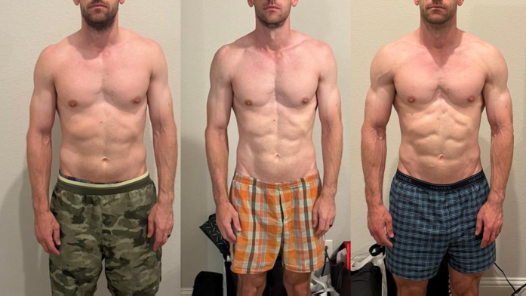
BUT STUCK.
Gary came to Stoic Physique at 42 with a history of effort that had not produced results. He was not lazy. He was not undisciplined. Two things kept getting in the way.
The first was his feet. Severe bilateral plantar fasciitis with prior surgeries took running, heavy squats, and high-impact conditioning completely off the table. Every program he tried was built for someone without that constraint.
The second was his life. A family household, home-cooked meals, weekend dining, and moderate social drinking meant generic nutrition plans broke down within days. Sustainability was never built in.
His goal was specific: visible definition, single-digit body fat, and a lean build toward 180 pounds — without making his feet worse. He had the discipline. He needed a system built for his actual life.
WITH THE REAL PICTURE.
Before any plan was written, every constraint was mapped. This is not standard practice in most coaching programs. At Stoic Physique it is the starting point.
Prior surgeries on both feet. No running, no heavy squats, no high-impact cardio. All leg and conditioning work required custom low-impact programming.
Dinners cooked at home by his spouse. Lunches typically leftovers. Weekend meals out with family. All of this was built into the nutrition plan — not worked around.
Financial Analyst career with demanding periods throughout the year. Training load and nutrition targets were adjusted seasonally to prevent setbacks during high-stress windows.
Planned travel used as a short-term physique milestone. The system was designed to maintain leanness through travel periods rather than treating them as disruptions.
One to two social drinking occasions per week. Accounted for in the nutrition structure — not eliminated, not ignored. Sustainability over restriction.
Digestion optimization was a core focus from the start — required to support higher caloric intake in Phase Two and sustain muscle building without GI issues.
EVOLVED OVER TIME.
Gary's nutrition was not a static plan handed to him on week one. It was a living system — adjusted weekly based on data, recalibrated at each phase transition, and designed to account for every real-world variable in his life.
Caloric Structure
Deficit calibrated weekly based on data. Not aggressive — sustainable. Adjusted around high-stress work periods.
Key Adjustments
Macro ratios set for fat loss while preserving muscle. Digestion optimizations introduced.
Real-Life Integration
Home dinners and leftover lunches built in. Weekend restaurant meals planned. 1–2 social drinks per week accounted for.
Caloric Structure
Periodic higher-calorie days timed to training load and recovery demands. Used to manage hormonal adaptation and prevent metabolic slowdown.
Key Adjustments
Carbohydrate cycling used to replenish glycogen, support training output, and maintain metabolic rate through the cut. Timed to heaviest training sessions.
Caloric Structure
Short planned maintenance periods during the extended cut to prevent excessive hormonal and metabolic adaptation.
Key Adjustments
Calories raised to maintenance. Macro structure maintained. Planned around high-stress work periods and travel to prevent uncontrolled rebounds.
Caloric Structure
Gradual caloric increase to approximately 3,000 calories per day. Timed to peak insulin sensitivity window.
Key Adjustments
Macro ratios shifted to support muscle gain. Digestion protocols adjusted to handle higher intake. Recovery nutrition prioritized.
Real-Life Integration
Higher calorie targets met through home-cooked dinners. Household cooking style worked naturally into the higher intake structure.
How It Works
Carbohydrates added back in deliberate weekly increments rather than a sudden jump. This prevents fat rebound while allowing the metabolism to upregulate at each new caloric level.
Why It Matters
A sudden caloric increase after a prolonged deficit stores the surplus as fat. Titrating carbs upward lets the body use each additional increment for muscle repair and glycogen refill first.
How It Works
Higher calorie intake requires foods the gut can process efficiently. Fibre sources, meal timing, and food combinations were adjusted so Gary could hit 3,000 calories without discomfort or bloating.
Why It Matters
Digestive stress during a caloric increase leads to inconsistent adherence. Getting food selection right at this stage set the foundation for the volume Gary would need to sustain in Phase 3.
Caloric Structure
Lean surplus maintained at approximately 3,000+ calories. Adjusted based on weekly weight and body composition data.
Key Adjustments
Macro ratios optimized for hypertrophy. Protein targets maintained. Carbohydrate timing structured around training sessions.
Real-Life Integration
System designed for long-term sustainability within family life. Structured flexibility with clear weekly targets.
How It Works
Carbohydrates are front-loaded around training sessions to maximize performance and muscle protein synthesis. Rest day carbohydrate totals are modestly lower, keeping weekly averages aligned with the lean surplus target.
Why It Matters
Eating the same macros every day at a surplus leads to unnecessary fat gain. Timing carbs to training output means more of the surplus goes toward muscle and less toward storage.
How It Works
Gary now reads his own weekly data — weight trend, training performance, and energy levels — and makes informed caloric adjustments independently. Stoic Physique remains available for support but is no longer directing every decision.
Why It Matters
The goal was never dependence on a coach. This is the exit ramp. Gary understands his own system well enough to maintain and build on his results for the rest of his life without starting over.
The Permanent Physique Protocol
43 Weeks. Every Calorie Intentional.
Gary's nutrition was never a flat cut. From week one, calories were mapped to a precise arc: controlled deficit, strategic reset, then a lean mass build that brought him to 3,000+ calories at full body weight.
Nutrition Architecture
Not Every Day Looks the Same.
Gary's weekly calorie structure was built around his training schedule. Two back-to-back refeed days were timed to his most demanding sessions, working synergistically to elevate metabolic rate for longer than a single refeed could achieve.
What each day means:
Mon, Tue, Fri — Training days (1,920–1,960 cal)
Slightly above the deficit baseline to support performance and recovery. Carbohydrates are timed around the workout window to fuel output without breaking the cut.
Wed — Refeed Day 1 (2,460 cal)
The primary refeed, timed to the most demanding training session of the week. Carbohydrates are pushed up significantly to replenish glycogen, support hormonal signaling, and reinforce that the body is not in a famine state. Gary's response showed his body was absorbing the refeed well, opening the door to add a second refeed day.
Thu — Refeed Day 2 (2,200 cal)
Running a second refeed back to back at a slightly lower intake allows both days to work synergistically to elevate metabolic rate for a longer duration. Sitting on another high-focus training day means the extra fuel goes directly to performance and muscle signaling. If calories have been spilling over on other days, this is the first refeed to pull back or eliminate.
Sat, Sun — Rest days (1,740–1,780 cal)
The lightest days of the week. Lower activity means lower energy demand. Protein stays consistent; the reduction comes from carbohydrates. The gap between Sunday and the midweek refeeds is what makes the refeed contrast effective.
The Training System
43 Weeks. Every Rep Earned.
Gary's training ran on a structured block system. Each block built directly on the last: precision first, then strength, then conditioning. No guessing, no random programming.
Control Block
Tempo. Stability. Form.
The foundation of every training cycle. Tempo is slowed, movement patterns are locked in, and form takes priority over load. This is where Gary built the body awareness that made every subsequent block more effective.
Progressive Overload
Add load. Add reps. Adapt.
Load increases 2.5–5% where form holds. If adding weight is not yet feasible, 1–2 additional reps at the same load are added instead. The body is adapting and getting stronger session over session.
Intensification
Lower reps. More rest. Heavier.
Rep ranges drop slightly, rest periods extend, and load increases where form stays controlled. This is pure strength expression built on the foundation the previous blocks established.
Density Block
Same load. Less rest. More work.
Load holds steady but rest periods shorten by 10–15 seconds. Cluster sets and alternating supersets keep work density high. Controlled conditioning that builds capacity without sacrificing the strength already built.
Deload Week
Recover. Reset. Reload.
Volume drops, loads sit at 50–60% of working weight, and focus returns to perfect execution and joint-friendly ranges of motion. The goal is to clear accumulated fatigue so the nervous system, joints, and connective tissue fully recover before the next push.
This is what the Permanent Physique Protocol produces when every variable is accounted for.
SOUNDS FAMILIAR.
Disciplined. Constrained. Not getting the return your effort deserves. The Precision Strategy Session is where we determine exactly how this system would be built around your life.
APPLY TODAY© Stoic Physique | Privacy Policy | Terms
The results shown are those of specific clients. Individual results will vary based on effort, physiology, adherence, and other factors.